
Wednesday, 16 September 2026
Rebirth of Choice: The Raj Jain Story
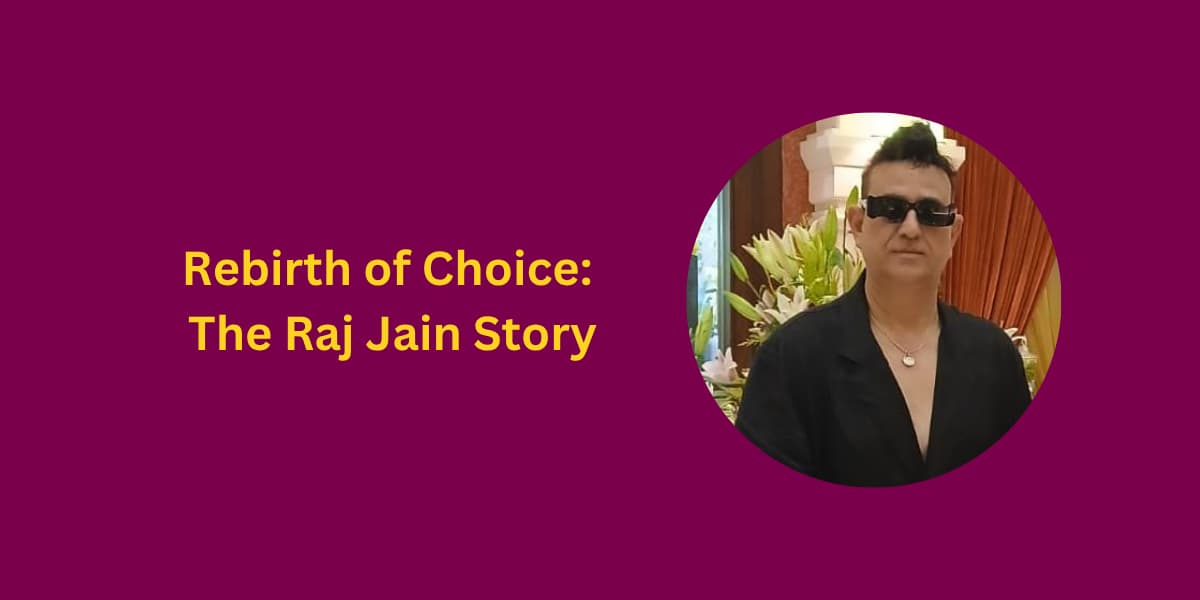
Somewhere over the Arabian Sea, on a flight from Oman to Bangalore, Raj Jain overheard a couple talking about something called Marzi. He didn't know it yet, but that conversation was about to hand him back a life he'd quietly set aside thirty years earlier.
"I came to know about Marzi in the flight only," he says, still sounding faintly amazed by it. Within days he registered, walked into the Marzi office, and sung the audition song that would reopen a door he'd shut in his twenties.
To understand why that door mattered, you have to go back to Ajmer, where Raj was born in 1972, into a Jain family, in a city he calls "well-known for romance and religion." At six-foot-one, he jokes he was "a standing model of Charles Darwin"- tall, restless, and, by his own admission, someone who has never quite stopped believing in choices. "Since my childhood only, I always believed in choices," he says. "Whatever I like, I always do that."
That belief sent him to Mumbai at eighteen, armed with six months and a promise to his family that he'd try his best to become an actor. It worked, for a while. He shared the screen with Kabir Bedi and Kamaljeet Singh in Stories of the Bible, and with Akbar Khan in Akbar the Great. He was shortlisted at regional level, in Adonis Man of the Year, reaching the national top sixteen, and later took the Splendor Man of the Year title. For a young man from Ajmer, it was heady stuff.
Then real life called him back. His family asked him to finish his studies, and he did, a PGDS&M equivalent to an MBA, followed by a corporate career that began at Usha International in 1995 and stretched across thirty years. He built a life, a family, a name in international admissions, and eventually settled into a senior role with Jain University in Bangalore. The stage, and the choices that came with it, waited quietly in the background.
Marzi, he says, is what gave those choices their voice back. "It's a rebirth," he explains. "Rebirth of your choices." At fifty-four, he has returned to auditions, walked runways again, and been told by casting directors that he's "perfectly alright for historical roles." He has taken up singing, thrown himself into fitness, and built a small home gym in his JP Nagar apartment.
There is a quieter architecture behind the enthusiasm. His wife, a PhD in English and a schoolteacher, has stayed in Ajmer, close to their family home; his daughter works at EY, his son at Grant Thornton, both grown and, in his words, "they understand me." Raj lives alone in Bangalore now, by choice, filling his days with travel for work and his weekends with Marzi's community of people who, as he puts it, "have gone through many faces" and understand each other without needing to explain.
He is candid that age changes little of what matters. "There is no expiry of confidence," he says, "no expiry of your attitude, no expiry of your choices." His philosophy for staying whole through decades of change is disarmingly simple: adapt and adopt, learn, unlearn, and relearn.
Ask him to sum up a life that has run from Ajmer film dreams to Bangalore boardrooms and back to a stage again, and he doesn't hesitate. "Life is Marzi, in a nutshell," he says. " With no choices, life is nothing."