
 Back to Lessons from the Experts


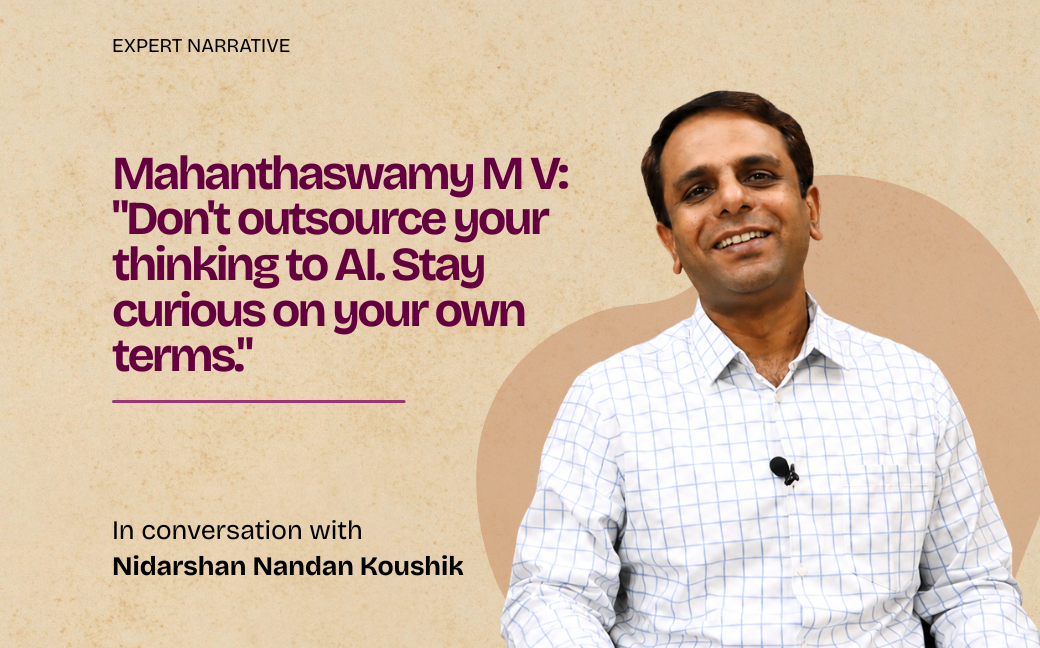
A digital literacy educator on how India's 50+ generation can navigate a changing world without feeling left behind
Don't outsource your thinking to AI. Stay curious on your own terms.
You work at the intersection of digital literacy and AI adoption. When you look at someone in their 50s or 60s who has just moved to a new city and is suddenly surrounded by tools and platforms they have never needed before, where does the difficulty actually sit?
Change is hard for almost everyone. That is not a generational thing. But for someone who has also just moved to an unfamiliar city, there is a compounding effect. They are navigating a new place and new tools at the same time, and both feel unfamiliar.
The most important thing to understand is that discomfort during adaptation is completely normal. There is a learning curve, and the only way through it is to actually live through it. You cannot skip it. But you can make it less overwhelming by being realistic about what you are trying to do.
One thing I always say: some things will not change regardless of which platform you use. Pricing set by aggregators, for example, is what it is. There is no point spending energy trying to navigate around those. Focus your attention instead on the things that do change, the things where learning the tool actually gives you more access, more agency, more connection.
"Discomfort during adaptation is completely normal. There is a learning curve, and the only way through it is to live through it."
For someone new to a city and trying to find things to do, people to meet, and ways to stay engaged, which digital tools actually matter?
I keep it simple. Three tools for getting connected to a new place.
The first is BookMyShow. Most people know it for movies, but it is genuinely useful for discovering what is happening locally. Concerts, workshops, cultural events, things you would never have found otherwise.
The second is Marzi, which is built specifically for people above 50 who want to meet like-minded people and join activities that actually suit this stage of life. That kind of specificity matters. It is not a generic event platform.
The third is Meetup. It is interest-based, so whether someone is into hiking or photography or reading or anything else, there is usually a group nearby. It is a good way to find people who share something specific with you, which tends to make connection easier than walking into a general social event.
And for someone who wants to stay curious, structured in their time, and genuinely engaged intellectually, what is your view on AI tools?
There are four I would point people toward: ChatGPT, Claude, Perplexity, and Gemini. Each has its own strengths, and it is worth trying more than one to see which feels most natural to use.
But I always give three ground rules alongside any tool recommendation, because I think they matter as much as knowing the tools themselves.
The first is: do not rely on AI completely. These tools hallucinate. They sound confident and get things wrong. Always verify anything important before acting on it.
The second is: do not outsource your thinking. The risk with AI is not just bad information. It is that if you stop thinking for yourself, you lose that capacity over time. Use AI to enhance your curiosity, not replace it. Ask it to explain something you want to understand better, not to think for you.
The third is: do not get addicted to it. Use it for things that genuinely improve your life, your health, your learning. There is a dark side to how these tools are designed, and it is easy to drift into passive consumption. Stay intentional about how you use it.
"Use AI to enhance your curiosity, not replace it. If you stop thinking for yourself, you lose that capacity over time."
If you were designing a digital literacy programme specifically for India's 50+ generation, what would it look like?
Three sessions. That is what I would start with.
The first session would be on how to adapt. Why does technology change so fast, what does adaptation actually require, and how do you stay engaged without feeling constantly left out? A lot of people skip this and go straight to the tools, but understanding the context first makes everything else easier.
The second session would be on what AI actually is. Not technical definitions, just a clear, honest picture of what these tools can do, what they cannot do, and what matters for an everyday user. The goal is to demystify it without overwhelming anyone.
The third session would be on the essential tools. Which ones are worth knowing right now, how to navigate them practically, and how they can fit into daily life in a way that is useful rather than stressful.
The format matters as much as the content. Community-led workshops, free or paid, are the right model for this audience. Not a lecture. Not a course with homework. A room where people can ask questions, make mistakes, and learn alongside others who are figuring out the same things.
Because honestly, most people are not afraid of technology itself. They are afraid of feeling stupid in front of it. A room where no question is too basic changes that entirely.
"Most people are not afraid of technology. They are afraid of feeling stupid in front of it. The right room changes that entirely."
Comments (0)